Website Design Copyright 2026 © HONEST SENSOR CORP.
All Rights Reserved. 網頁設計 by 覺醒設計

TL;DR — Quick Tech Notes
| Comparison | Incremental | Absolute |
| Power-off memory | Like a goldfish — 0% | Like an elephant — 100% |
| Homing | Must return to zero on every startup | Knows its position instantly at power-on |
| Signal type | A/B phase + Z index pulse | Gray Code、SSI、BiSS |
| Resolution vs. cost | High resolution, budget-friendly | Higher bit = higher cost |
| Multi-turn capability | Single-turn only, needs external counter | Single-turn or built-in multi-turn (mechanical/electronic) |
| Typical application | Motor speed feedback, wheel tracking | Elevators, cobots, safety drives |
01 Core Concept — What are they actually measuring?
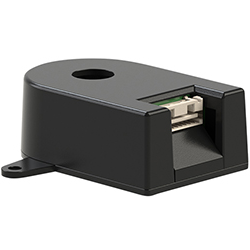
Measures changes in motion. Each step generates A/B pulse signals; phase difference indicates direction, and Z gives one index reference per turn.
Power loss = data loss, so homing is required after reboot.
Example model:HS30F
 Learn more ◆
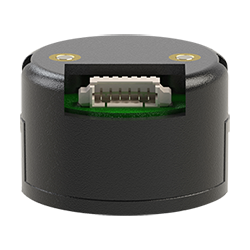
Its disk is etched with Gray codes or magnetic patterns — every angle maps to a unique address. Even after power loss, it comes back reporting, “I’m at 137°.” A true memory beast.
Example model:HS28D
02 Signal Output Differences
| Parameter | Incremental | Absolute |
| Interface | TTL/HTL, differential RS-422 | SSI, BiSS-C, CANopen, EtherCAT |
| Signal lines | 2–3 (A, B, Z) | Varies the interface by protocol; even 17-bit via 2-wire serial |
| Noise immunity | Stable over long distances, from tens to hundreds of meters | Differential + CRC for advanced noise and safety protection |
03 Resolution in Practice

More grating lines = higher resolution, but lacks non-volatile memory — homing remains a limitation.

Single-turn 17-bit (131,072 cpr) and beyond are mainstream; add 12-bit multi-turn (4096 turns) for a total over 29 bits.Higher precision, higher cost.
04 Startup behavior difference
In an incremental system, if homing isn’t an option, add a battery or non-volatile counter.
Absolute encoders are plug-and-play—ideal for safety interlocks or aerial equipment (like fans suspended mid-air that can’t “spin to find home”).
05 Application Guide
| Scenario | Recommended Type | Why |
| High-speed motor feedback | Incremental | Pulse = speed; controllers love it |
| Multi-joint robotic arms | Absolute | Position recovery after power loss |
| PCB depaneling / repetitive cutting | Incremental | Homing acceptable, cost-efficient |
| Elevators / cranes | Absolute | Safety-critical — no zero reset allowed |
06 Emerging Trends (2025+)
1Inductive encoders:Excellent durability and high accuracy potential
2Reflective optical encoders:All-in-one IC (LED + sensor + DSP), <3 mm thick — perfect for lightweight AGVs
3Functional safety (SIL2/PL d):Built-in dual channels, CRC check, diagnostics — tailored for cobots
4Wireless + Energy Harvesting:Converts motion into power for multi-turn counting — goodbye batteries
07 Quick Selection Checklist
1Unstable power supply? → Absolute
2Need multi-turn? → Absolute
3Tight budget, just need speed/relative feedback? → Incremental
4Cable length >10 m? → Choose differential or serial interface

Think of it this way:
Incremental = Snapchat stories — gone after power-off.
Absolute = iCloud backup — remembers everything.
Which one fits your machine — short videl or eternal Reels
Your motion control partner — always ready to assist.
Contact us today
In compliance with EU personal data protection laws, we are committed to protecting and providing you with control over your personal data. By clicking "Accept All", you allow us to place cookies to enhance your experience on this site, help us analyze site performance and usage, and enable us to deliver relevant marketing content. You can manage your cookie settings below. By clicking "Agree" you agree to the current settings. For more information, please visit the Privacy Statement.
This website uses cookies
In compliance with EU personal data protection laws, we are committed to protecting your personal data and providing you with control over it. By clicking "Agree", you allow us to place cookies to improve your experience on this site, help us analyze site performance and usage, and allow us to deliver relevant marketing content.
By clicking "Only necessary" you allow us to place only necessary cookies. The website cannot function without these cookies and you cannot switch them off on your system. These cookies are typically set only in response to an action you perform (i.e. a service request), such as setting privacy preferences, logging in, or filling in a form. You can set your browser to block or prompt you for these cookies, but this may prevent some site features from working.